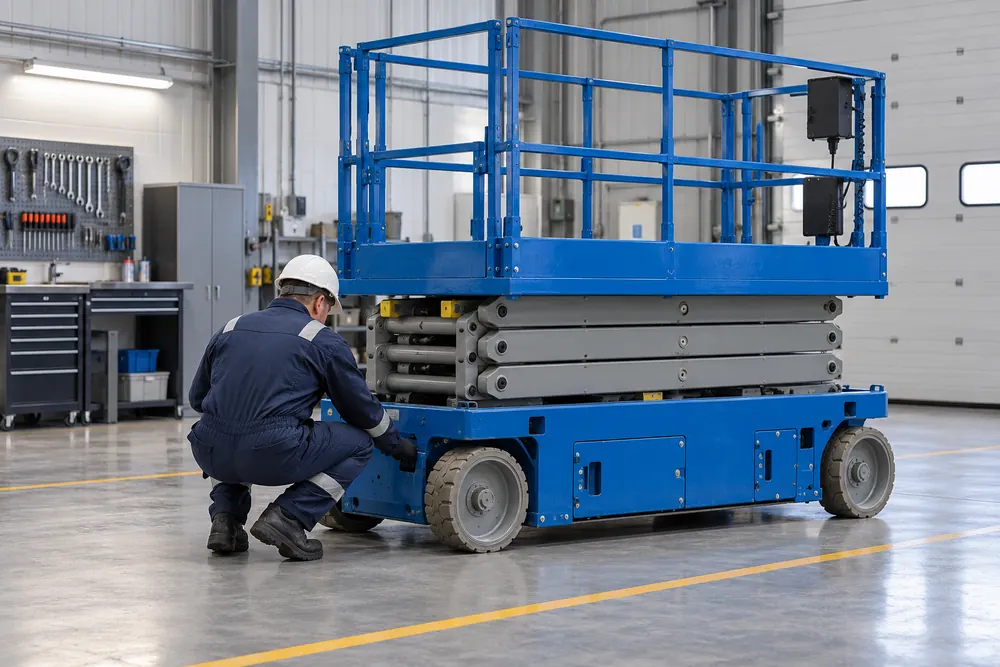
MEWP inspection in Aberdeen needs a clear scope. A pre-use check, a maintenance inspection and a LOLER thorough examination serve different purposes, and one should not be mistaken for another.
Tell us the machine type, location, identification details and the reason for the inspection. We help commercial equipment users set out an enquiry for the appropriate inspection or examination, including the records needed and any access or isolation requirements at the site.
Choose The Correct Inspection Scope
A daily pre-use check helps the operator identify visible damage, leaks, control problems and other defects before work begins. Planned maintenance addresses condition and servicing in line with the manufacturer’s instructions. A thorough examination is a separate, detailed assessment of safety-critical parts by a competent person.
If your request is prompted by a damaged component, unusual movement, impact or a failed safety device, explain that immediately. Stop using equipment with a safety-critical defect and follow the relevant reporting and isolation arrangements. Do not continue operating while waiting for a routine appointment.
Understand LOLER Examination Requirements
The Lifting Operations and Lifting Equipment Regulations 1998 require thorough examination in the applicable circumstances and a written report. For equipment lifting people, the usual interval is six months, unless a competent person’s examination scheme sets the interval. Further examination may be required after exceptional circumstances (HSE examination guidance).
A report records the examination date, any relevant defects and when the next examination is due. It does not remove the need for ongoing checks or maintenance. Review the actual report and any conditions rather than relying on a sticker or a verbal statement.
Competence And Impartiality
The person carrying out a thorough examination needs suitable knowledge and experience of the equipment and the ability to assess defects. HSE also addresses the need for sufficient independence and impartiality in that assessment. Ask how the proposed examiner meets the requirements for the machine and examination scope.
The examiner should not simply assess their own routine maintenance work. Establish the appointment and reporting arrangements clearly, especially where one business arranges both servicing and examination. Do not assume a general service visit includes a compliant thorough examination unless that scope is agreed.
Prepare The Machine And Documentation
Provide the make, model, serial number and current location. Gather the previous examination report, maintenance history, operating instructions and any details of damage or repairs. Tell the inspecting firm if documents are missing, rather than presenting an incomplete history as a clean record.
Agree a safe inspection area with suitable access, isolation and space for any required functional checks. The examiner determines the appropriate scope and methods. A busy loading route or a machine trapped behind stored materials can prevent the planned assessment from being completed safely.
Act On Findings And Keep Records
PUWER inspection and maintenance duties continue alongside LOLER. Establish who receives the report, who reviews defects and who authorises corrective work. Where a defect creates an immediate danger, the machine must not remain in service while the next step is debated.
Keep the relevant examination and inspection records available to those managing the equipment. If a hired MEWP arrives without the required documentation, resolve that before use. A satisfactory report is evidence about the examination, not an approval for every possible task or site condition.
Your Inspection Process
- Identify whether you need a pre-use inspection, planned maintenance inspection or LOLER thorough examination.
- Send machine details, previous reports, the site location and information about defects, repairs or exceptional events.
- Agree the competent person, inspection scope, safe access, isolation requirements and reporting arrangements.
- Review the findings, arrange any required corrective action and retain the records before authorising further use.
MEWP Inspection Pricing Factors
MEWP inspection costs depend on machine type, location, the agreed scope, documentation and the access needed to examine it. A thorough examination may require different time and preparation from a routine maintenance inspection. Repairs, replacement parts or a return visit should not be assumed to be included.
Ask the proposed firm to distinguish examination, servicing and remedial work in its quote. If several machines need attention, list each one and its location. Confirm how defects will be reported and who will receive the written documentation.
Read the relevant guidance: HSE work at height, PUWER and LOLER. HSE examination guidance explains the examination intervals and competent-person requirements.
MEWP Inspection Questions
Is A MEWP Service The Same As A LOLER Examination?
A MEWP service is not the same as a LOLER thorough examination. Servicing maintains the machine, while thorough examination assesses safety-critical parts and produces the required written report. Confirm both scopes separately when booking, and check that the examination is carried out by a suitably competent and sufficiently impartial person.
How Often Does A MEWP Need Thorough Examination?
MEWP thorough examination is normally required every six months for equipment lifting people, or in accordance with a competent person’s examination scheme. Examination can also be needed after exceptional circumstances that may affect safety. Check the applicable report and scheme, and continue pre-use checks and maintenance between examinations, as HSE explains.
Can A MEWP Be Used With A Reported Defect?
A MEWP with a safety-critical defect must be taken out of service and the defect addressed through the proper process. The examination report or inspection findings may specify restrictions and required action. Do not treat a future repair booking as permission to keep using unsafe equipment. Escalate uncertainty to the competent person.